A noise sensor costs less than one bad night. That is why most owners buy one, and the reasoning is sound as far as it goes. What it leaves out is that a sensor does not stop a party. It tells someone that a party is starting. Everything that actually protects the house happens after the alert, and almost none of it comes in the box.
We manage short-term rentals in the Triangle and Southeast Florida, and noise monitoring is one of the few pieces of equipment we would put in every home we take on. It is also the piece owners most often expect to do more than it does. Before you compare one brand against another, it is worth being precise about what you are buying.
These devices report sound level over time. They are not listening to conversation, and the systems built for this market are designed around sound levels rather than audio recording — confirm that directly with any vendor you are considering, because it is the first question a guest will ask if the subject ever comes up.
Sound level is a narrow signal, and the narrowness matters. A sensor can tell you the living room has been loud for twenty minutes. It cannot tell you whether that is a speaker, a toddler, or thirty people. Occupancy detection is a separate capability — some systems estimate how many devices are connected to the home's network — and it answers a different question than the decibel reading does. If you want to know how many people are in the house, ask whether the system does that, because a noise reading will not tell you.
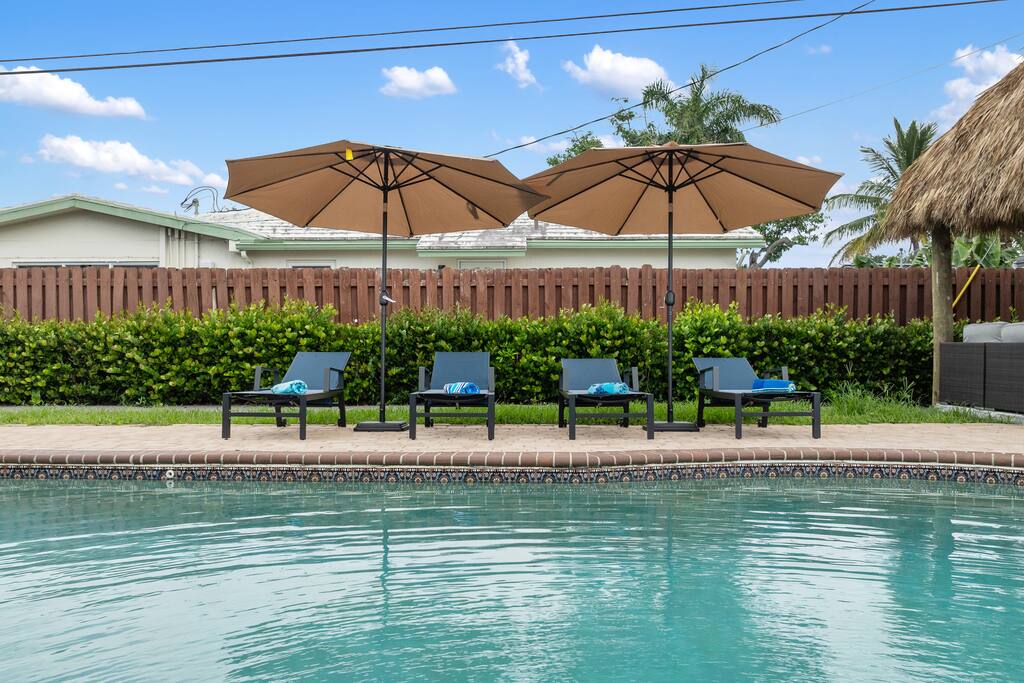
The second limit is placement. A sensor hears the room it is in. A house where the noise problem is the pool deck and a house where the noise problem is the great room need different coverage, and no amount of sensitivity tuning on an interior unit fixes an exterior problem.
Owners usually start by comparing brand to brand — Minut and NoiseAware are the two names we are asked about most — and get lost in feature lists. Specifications and pricing on both move, so check each vendor's current documentation rather than a comparison table someone wrote two years ago. The dimensions below are what change the outcome at your property, whichever brand you land on.
| Dimension | Why it decides the outcome | What to confirm before you buy |
|---|---|---|
| Indoor and outdoor coverage | Most complaints that reach a neighbor come from outside — decks, pools, driveways, hot tubs. An interior-only install misses them. | Whether the system sells a weather-rated outdoor unit, and what it costs to add one later. |
| Power and placement | Battery units go where you want them; powered units go where the outlets are. This quietly determines your coverage map. | Power source, expected battery life, and whether a unit can be mounted out of easy reach. |
| Alert routing | An alert that lands only in an app you are not holding at midnight is a log entry, not a warning. | Whether alerts can reach more than one person, by text or phone, and whether they escalate if nobody responds. |
| Connection to your booking system | An alert on a vacant night is a different problem than an alert on night two of a six-night stay. Context changes the response. | Whether the system ties alerts to the reservation and the guest's contact details. |
| History and reporting | If you ever need to show what happened and when, you need the record to exist before the argument starts. | How long readings are retained and whether you can export a timeline. |
Notice that only two of those five are about the hardware. The rest are about what happens to the information after the device produces it.
Here is the sequence that decides whether your noise system worked. It is 11:40 on a Saturday. The sensor crosses its threshold. Someone reads the alert within a few minutes. That person decides whether it is a loud dinner or the beginning of something. They message the guest. They wait. If the level drops, it is over. If it does not, someone calls. If that does not work, someone drives to the house.
Every link in that chain is a person, not a product. The device handles the first step and none of the rest. So the real question when you are choosing a system is not which sensor is more accurate. It is: who is awake, and how far away do they live?
This is the part owners are sold past. A short-term rental is a business, not passive income. It is passive for you precisely because somebody else is taking the 11:40 alert — and if nobody is, you have not bought a noise policy, you have bought a notification you will read on Sunday morning after the neighbor has already called.
National management companies can route an alert as well as anyone. They have apps, dashboards, and staffed queues, and they will message your guest quickly. What they cannot do is arrive.
That is not a criticism of how hard anyone works. It is geography. A team covering homes in dozens of markets from a central office has no one to send to a house in Durham or Pompano Beach at midnight, so every escalation path ends at the same place: another message to the guest. When messaging is the whole ladder, a guest who has decided to ignore you has already won. The ability to put a person at the door in twenty minutes is not a feature a national operator can add; it is a thing you either have locally or you do not.
When we evaluate a noise system for a property we manage, the sensor choice takes an afternoon. Building the response — who holds the phone, who is on call that weekend, which vendor we would wake up — is the part that takes real work, and it is the part that determines whether the equipment was worth buying.
The most common failure we see is not a bad sensor. It is a sensor set so sensitively that it fires on ordinary occupancy, which trains the owner to swipe the alerts away. After two weeks of that, the system is off whether or not it is powered on. Set it too loose instead and you learn about the problem from a neighbor, which is the outcome you spent the money to avoid.
Calibrate against the house, not against a number someone recommended. Let the system run through a normal, well-behaved stay and look at what the house reads when nothing is wrong. Set the threshold above that baseline, then tune it over the next few stays. Do this per property. A three-bedroom with a pool deck in Deerfield Beach and a townhouse in Raleigh will not share a setting, and a portfolio-wide default is how you end up with one house that cries wolf and another that stays silent through a problem.
Give the sustained reading more weight than the spike. A door slamming is a spike. A party is twenty minutes of elevated level that does not come down, and that pattern is what you want to act on.
The hardware and the subscription are the cheapest part of noise management, and owners spend most of their decision-making energy there because it is the part with a price tag on it. The expensive part is coverage: someone who reads the alert at midnight, knows the house, and can be standing in the driveway before it becomes the kind of night that costs you a relationship with the neighbors and a stretch of blocked calendar.
Buy the sensor. It is worth it. Just be clear that what you have bought is information, and information only pays off if there is somebody on the other end of it who can act.
We manage short-term rentals across the Triangle — Raleigh, Durham, and Chapel Hill — and Southeast Florida, from Miami up through Fort Lauderdale, Pompano Beach, and Delray Beach, and we answer the midnight alerts on the homes we run. If you want to know what your property should be earning with that kind of coverage behind it, we will put together a free revenue estimate for your address.

Get a free, no-obligation revenue estimate for your address — normally a $500 analysis, free for owners.
Get your free estimate