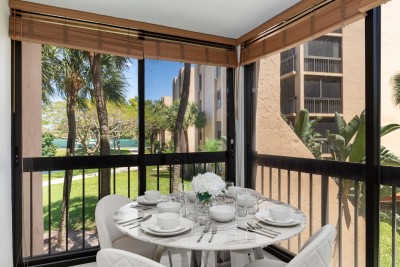
A pool changes what your rental is. Not just what it earns — what it is, legally and operationally. The same house with a screened lanai and no water is a hospitality business with ordinary risks: a guest trips on a step, a dishwasher floods a floor, a neighbor complains about parking. Add a pool, a hot tub, or a dock, and you have added the one category of incident that is irreversible. Everything else on the property can be repaired or refunded.
Most owners buy the pool home for the nightly rate and then handle the water the way they handled it when they lived there. That is the mistake. When you lived there, you knew who was in the yard. Now you have strangers arriving after dark, in a house they have never been in, sometimes with children you were never told about, sometimes after several drinks. The pool did not change. Everything around it did.
Owners tend to picture a single catastrophic scenario and stop thinking. The real exposure is more ordinary than that, and it comes from three places.
The physical property. Barriers, gates, latches, drain covers, depth markings, lighting, the surface around the water, the condition of the dock or seawall. This is the part owners assume is fine because it was fine at inspection. Gate self-closers wear out. Latches get propped open by cleaners and never reset. Pool lights fail and nobody reports it because nobody swims at night during the owner's own stays.
The gap between what you advertised and what is true. This one catches good operators. A listing that says "heated pool" when the heater has been down for three weeks. Photos showing a fenced yard after the fence section was removed for a landscaping job. A description that calls the water "shallow enough for kids" — a phrase you should never write. Your listing is a set of representations. Every one of them is something a guest relied on.
The paperwork you have not read since closing. Your insurance, your HOA or condo documents, and your local requirements for pools and waterfront structures. Owners routinely carry a policy written for how they used the house before, under rules they last checked when they bought.
We are not going to tell you what your policy covers, because we do not know and neither does anyone writing a blog post. What we will tell you is that "I have insurance" is not an answer, and the conversation with your carrier or broker should be specific enough to produce written responses to these questions:
That last one matters more than owners expect. Booking-platform host protection is a product with its own terms, and it is not a substitute for a policy written for your use. Read what it excludes before you treat it as your floor.
If your broker cannot answer those five questions in writing within a week, that tells you something about who is handling your account.
We manage homes with pools, homes with hot tubs, and homes on the water, and we say no to some of them. Not because the water is a problem — because the setup around the water is, and because we are the ones who have to operate it after you have gone back to your day job.
What we look for is boring and specific.
| Feature | What it adds to the operation | What we check before we take it on |
|---|---|---|
| In-ground pool | A daily-condition item that never stops, plus an access-control problem at every check-in | Barrier and gate condition, self-closing and self-latching hardware, compliant drain covers, depth markings, lighting, and whether the yard can actually be secured |
| Hot tub | Water chemistry on a service schedule, a cover that is both a safety item and a consumable, and the highest rate of mid-stay guest contact of any amenity | Cover condition and lock, a documented service cadence with a local vendor, clear temperature limits, and whether the tub is visible from a neighbor's property |
| Waterfront or dock access | Unsupervised open water with no barrier possible, plus structures exposed to storms and tide | Dock and seawall condition, lighting, whether the shoreline can be gated from the house, and what the guest is and is not permitted to do with it |
| Watercraft included | An entire second liability category with its own rules | We generally decline. If a kayak or paddleboard stays on site, it comes out of the listing and gets stored, not offered |
Where a home fails on hardware, the answer is usually a fix, not a no. Gates, latches, covers, and lighting are solvable. Where we say no is when the fix is refused, or when the geometry of the property means the water cannot be controlled at all and the owner wants it marketed as family-friendly anyway. We are not willing to put our name on that listing.
A waiver in your house rules is not a safety program. Neither is a sign. What actually reduces exposure is a set of habits that happen on every single turnover, whether or not anyone is watching:
None of that is hard. All of it is relentless. That is the honest description of this business: not difficult, just unending. Short-term rental is passive income only in the sense that someone else is doing the work — and on a pool home, the work is the product.
Water safety is enforced by someone physically standing at the property, on a schedule, who loses something when it goes wrong. A national manager's pool protocol is a field in a checklist app, executed by a contractor who was assigned the job that morning, reviewed by a coordinator three states away who has never seen the yard and cannot tell from a photo whether the gate actually latched or was held closed for the picture.
That is not a criticism of the people. It is what the structure produces. A company operating in forty markets cannot know that a particular Deerfield Beach yard has a gap between the fence and the neighbor's hedge, or that a Raleigh property's gate swells shut in August and gets propped open every summer as a result. Those facts live with whoever walks the property. If nobody walks it, the facts do not exist until they become an incident report.
Local is not a marketing adjective on a water property. It is the control.
Three things, in order. Call your broker with the five questions above and get the answers in writing. Walk the property yourself, or have someone walk it who will tell you the truth, and test the gate rather than looking at it. Then read your own listing end to end and strike every sentence that promises something about the water you cannot guarantee on the worst day of the year.
If you own a pool, hot tub, or waterfront home in the Triangle — Raleigh, Durham, Chapel Hill — or anywhere between Miami and Delray Beach, we will walk it with you and tell you plainly what we would fix, what we would market, and what we would not. We will also give you a free revenue estimate for the property, so you can see what the water is actually worth against what it costs to run it properly.
This article is general operating guidance, not legal or insurance advice. Requirements for pools, spas, barriers, and waterfront structures vary by state, county, and municipality, and your coverage depends entirely on your own policy. Confirm both with your attorney, your insurance broker, and your local building department before relying on anything here.

Get a free, no-obligation revenue estimate for your address — normally a $500 analysis, free for owners.
Get your free estimate